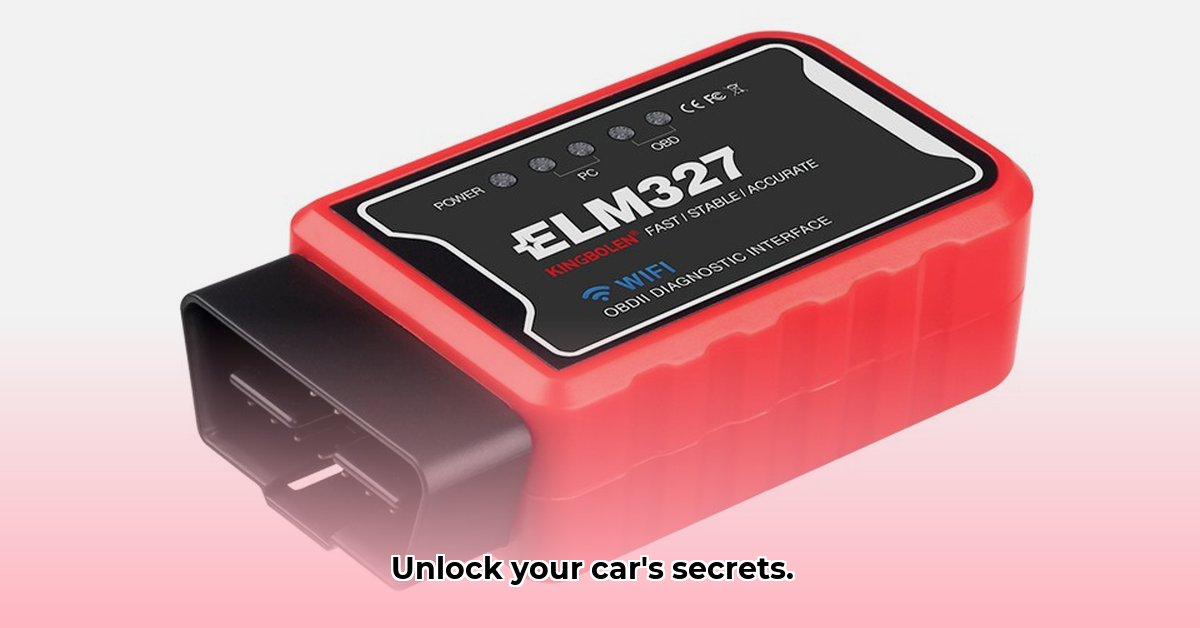
Navigating the ELM327 Maze: Genuine vs. Clone
Choosing an OBD II ELM327 scanner can feel overwhelming. The market is flooded with options, ranging from high-quality genuine devices to cheaper clones. Understanding the differences is crucial for accurate diagnostics. This comprehensive guide helps you navigate these complexities, comparing hardware, software, ease of use, and cost-effectiveness to find the perfect scanner for your needs. We'll even walk you through a step-by-step setup.
Hardware Head-to-Head: Speed, Protocols, and Build Quality
The core difference between premium ELM327 scanners and budget clones lies in their hardware. Premium scanners boast significantly faster data transfer rates—some exceeding 500,000 bits per second (bps)—compared to clones that might struggle at 38,400 bps. This speed directly impacts diagnostic accuracy and efficiency. But speed isn't everything. Genuine scanners typically support a broader range of OBD-II protocols, including crucial parameters frequently absent in cheaper alternatives. These missing parameters, such as EVAP (evaporative emission system), O2/HO2 (oxygen sensors), and B1S1 Lambda (fuel mixture), are critical for comprehensive vehicle diagnostics. A missing piece can lead to an incomplete puzzle.
Build quality also matters. Premium scanners are typically robust and well-made, often backed by a warranty. Cheaper clones tend to feel flimsy and might not withstand regular use. Consider this long-term cost; replacing a faulty clone repeatedly could exceed the initial cost of a high-quality scanner. Do you prioritize longevity and reliability or accept compromising on build quality for a lower initial cost?
Software Showdown: Compatibility, Features, and User Experience
The software accompanying your ELM327 scanner is equally important. Numerous applications are available, each with varying features, compatibility levels, and price points. Before purchasing, confirm compatibility with your vehicle's make and model, your device's operating system (Windows, Android, iOS), and the scanner's capabilities. Free software might lack features found in paid versions. Paid apps often enhance features, such as data logging and real-time sensor monitoring, providing a more in-depth diagnostic experience. Is the added functionality of paid software worth the investment for your diagnostic needs?
Ease of Use: Intuitive Design for Seamless Diagnostics
Even the most powerful hardware and software become ineffective with poor user experience. Prioritize intuitive navigation, clear instructions, and easy-to-interpret data displays. Helpful screenshots and video tutorials can significantly improve the overall user experience. Will you choose user-friendliness in interface above raw processing power?
Cost vs. Benefit: Long-Term Value and Investment
The price difference between high-quality and low-cost scanners can be significant. However, a reliable scanner that provides accurate information saves time, money and frustration in the long run. Inaccurate readings from a cheaper clone could lead to costly misdiagnoses and unnecessary repairs. It is a clear case of evaluating long-term costs and potential savings. Weigh the initial cost against potential future expenses – a more expensive, reliable tool may save you money in the long run by preventing costly mistakes.
Step-by-Step Setup and Usage Guide
- Assess Your Needs: Determine your diagnostic requirements. Are you a DIY enthusiast or professional mechanic?
- Research and Compare: Thoroughly research scanners and software, comparing features, compatibility, and user reviews.
- Verify Compatibility: Confirm compatibility with your vehicle, operating system, and chosen apps before purchasing.
- Purchase from a Reputable Source: Buy from trusted sellers offering warranties or guarantees.
- Install Software: Follow the software installation instructions; many providers offer helpful video tutorials.
- Connect Scanner: Securely connect the scanner to your vehicle's OBD-II port (usually located under the dashboard).
- Run Diagnostics: Use the software to retrieve diagnostic trouble codes (DTCs) and other vehicle data.
Feature Comparison: High-Quality vs. Low-Cost ELM327 Scanners
| Feature | High-Quality Scanner | Low-Cost Clone |
|---|---|---|
| Accuracy | Highly accurate and reliable | Often inaccurate and unreliable |
| Data Transfer Rate | Fast (500,000+ bps) | Slow (38,400 bps or less) |
| Protocol Support | Comprehensive, including EVAP, O2/HO2, B1S1 Lambda | Limited; missing key parameters |
| Build Quality | Durable and well-built | Often flimsy and prone to failure |
| Warranty | Typically included | Rarely included |
| Cost | Higher upfront cost | Lower initial cost, higher long-term cost |
This comprehensive guide empowers you to choose the best OBD II ELM327 scanner for your individual needs. Remember, investing in a reliable scanner ensures accurate diagnostics, saving time and money in the long run.
⭐⭐⭐⭐☆ (4.8)
Download via Link 1
Download via Link 2
Last updated: Monday, June 02, 2025